What Is Gasoline E15
Let’s start with the main question: what is gasoline E15?
Gasoline E15 is a fuel blend made of:
Ethanol is a type of alcohol made from plants such as corn or sugarcane. It’s commonly used as a renewable fuel additive.
The idea behind E15 is to combine traditional gasoline with a renewable ingredient to reduce reliance on fossil fuels.
What Does the “E15” Label Mean
The label E15 simply describes the percentage of ethanol in the fuel.
Here’s how common fuel blends work:
- E10 = 10% ethanol + 90% gasoline
- E15 = 15% ethanol + 85% gasoline
- E85 = 85% ethanol + 15% gasoline
So when people ask what is gasoline E15, they’re really asking about a gasoline mixture with 15% ethanol content.
How E15 Fuel Is Made
Producing E15 involves blending ethanol with traditional gasoline at fuel distribution facilities.
The process usually includes:
- Producing ethanol from corn or other crops
- Transporting gasoline from refineries
- Mixing the fuels at blending terminals
After blending, the fuel is shipped to gas stations.
Think of it like mixing two ingredients into one balanced fuel recipe.
The Role of Ethanol in Gasoline
Ethanol has been added to gasoline for many years.
Its purpose includes:
- Reducing emissions
- Increasing octane levels
- Supporting renewable energy
Because ethanol burns cleaner than gasoline, it can help reduce certain pollutants released by vehicles.
Differences Between E10 and E15
Most gasoline in the United States already contains ethanol.
The most common blend is E10.
So how does it differ from E15?
Key differences include:
E15 contains slightly more ethanol, which changes its properties slightly.
Vehicles That Can Use E15
Many vehicles can safely run on E15 fuel.
Generally, cars from 2001 or newer are approved for E15 use.
These include:
- Sedans
- SUVs
- Pickup trucks
- Flexible fuel vehicles
If you drive a relatively modern vehicle, chances are it can handle E15 without issues.
Vehicles That Should Avoid E15
Even though E15 works in many cars, it’s not suitable for every engine.
Vehicles that should avoid E15 include:
- Cars made before 2001
- Motorcycles
- Boats
- Small engines like lawnmowers
Using E15 in these machines may damage the engine or fuel system.
Benefits of Using E15 Gasoline
So why do some drivers choose E15?
There are several advantages.
Lower fuel cost
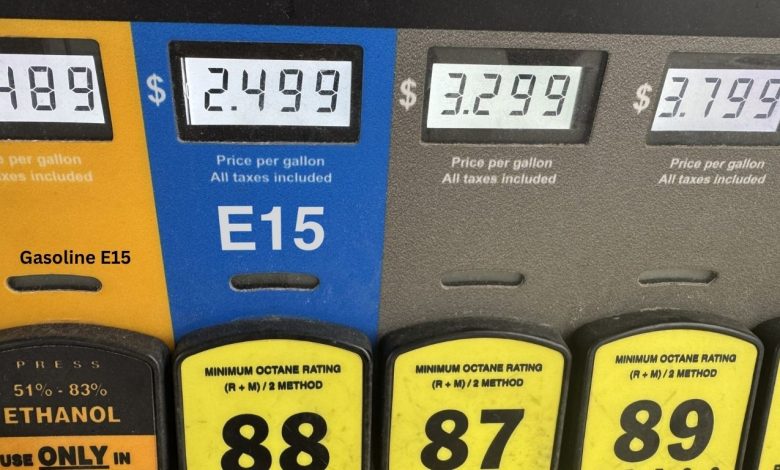
E15 is often slightly cheaper than regular gasoline.
Renewable energy
Because ethanol comes from crops, it’s considered a renewable fuel source.
Reduced emissions
Ethanol blends may lower certain harmful emissions.
For many drivers, E15 feels like a small step toward cleaner energy.
Possible Drawbacks of E15 Fuel
While E15 has benefits, it also has some limitations.
Lower energy content
Ethanol contains slightly less energy than gasoline. This can sometimes reduce fuel economy.
Compatibility concerns
Not every vehicle or engine can safely use E15.
Availability
Some gas stations still do not offer E15.
Environmental Impact of E15
One reason governments encourage ethanol blends is environmental impact.
Ethanol fuels may help:
- Reduce greenhouse gas emissions
- Lower carbon monoxide levels
- Support renewable agriculture
However, the environmental benefits are still debated among experts.
Fuel Efficiency and Performance
Some drivers worry that E15 might reduce vehicle performance.
In most modern vehicles, the difference is very small.
Drivers may notice:
- Slightly lower fuel mileage
- Similar engine performance
- No major changes in power
For everyday driving, many people won’t notice a difference.
E15 Availability at Gas Stations
E15 is becoming more common in many regions.
You’ll typically find it labeled as:
Some stations advertise it as a budget-friendly fuel option.
However, availability still varies depending on location.
Government Regulations and Policies
Fuel blends like E15 are regulated by government agencies such as the United States Environmental Protection Agency.
These organizations ensure that fuels meet safety and environmental standards.
Regulations determine:
- Which vehicles can use E15
- How it must be labeled
- When it can be sold
How to Know If Your Car Supports E15
Not sure if your vehicle can use E15?
Here are a few simple steps:
Check your owner’s manual
Most manuals list approved fuel types.
Look for fuel labels
Gas pumps often display compatibility information.
Consult the manufacturer
Car manufacturers provide official fuel recommendations.
When in doubt, it’s always best to double-check.
The Future of Ethanol-Blended Fuels
As the world searches for cleaner energy solutions, ethanol fuels may continue to grow.
Future developments may include:
- Higher ethanol blends
- Improved engine technology
- More renewable fuel options
Think of fuels like evolving technology—just as smartphones have changed over time, gasoline blends are evolving too.
Conclusion
So, what is gasoline E15?
In simple terms, E15 is a fuel blend containing 15% ethanol and 85% gasoline. It was created to provide a more renewable alternative to traditional fuel while maintaining compatibility with modern vehicles.
For most cars made in 2001 or later, E15 can be a safe and affordable option. It may reduce emissions and sometimes costs a bit less at the pump.
However, it’s important to check your vehicle’s compatibility before using it.
At the end of the day, understanding your fuel options helps you make smarter choices at the gas station—and keeps your car running smoothly.
FAQs
1. What is gasoline E15 used for?
Gasoline E15 is used as a fuel for most cars made in 2001 or later. It contains 15% ethanol and is designed to reduce emissions and support renewable energy.
2. Is gasoline E15 safe for my car?
E15 is generally safe for vehicles manufactured in 2001 or newer. Older vehicles and small engines should avoid using it.
3. Does E15 fuel reduce gas mileage?
E15 may slightly reduce fuel mileage because ethanol contains less energy than gasoline, but the difference is usually small.
4. Why is E15 sometimes cheaper than regular gasoline?
E15 can be cheaper because ethanol is often less expensive to produce than gasoline.
5. Where can I find E15 gasoline?
E15 is available at many gas stations, often labeled as E15 or Unleaded 88, though availability depends on your region.