

Introduction
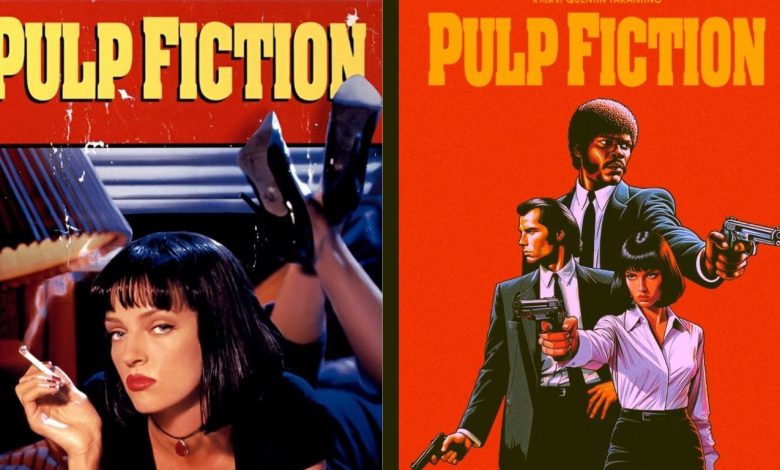
Think about movie posters that instantly pop into your head. Star Wars. Jaws. Titanic. Now pause for a second—did the pulp fiction poster sneak into your thoughts too? For many people, it does. That single image of Uma Thurman lounging with a cigarette, staring straight at you like she knows a secret you don’t, has become more than marketing. It’s a cultural landmark.
The pulp fiction poster isn’t just paper and ink. It’s a time capsule from the 1990s, a bold visual statement, and a symbol of Quentin Tarantino’s rebellious filmmaking style. Like a neon sign in a dark alley, it pulls you in and refuses to let go.
So why does this poster still matter decades later? Let’s break it all down.
What Is the Pulp Fiction Poster?
The pulp fiction poster is the official promotional artwork for Quentin Tarantino’s 1994 film Pulp Fiction. It features Mia Wallace, played by Uma Thurman, lying on a bed with a cigarette, holding a pulp novel.
What makes it special? It doesn’t scream action or drama. Instead, it whispers cool confidence. It invites curiosity rather than explaining itself.
Key point:
-
Minimalist yet bold
-
Character-driven rather than plot-driven
-
Instantly recognizable
The Origins of the Pulp Fiction Poster
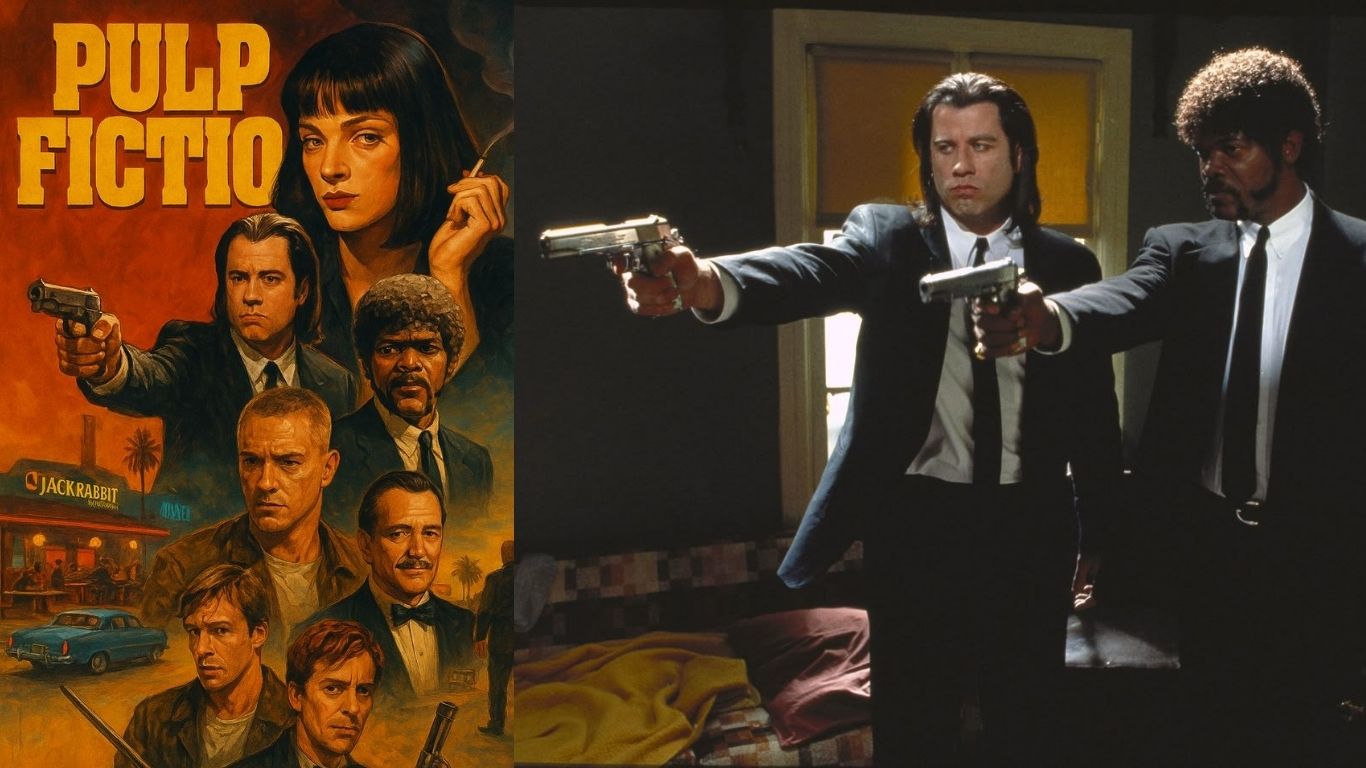
When Miramax prepared to release Pulp Fiction, they knew the movie was different. Traditional posters wouldn’t work. They needed something edgy, something that matched Tarantino’s unconventional storytelling.
The designers took inspiration from vintage pulp magazines—cheap crime novels sold in the mid-20th century. These covers were provocative, stylish, and a little dangerous. Sound familiar?
Bold insight:
The poster wasn’t designed to please everyone—it was designed to be remembered.
Why the Design Feels So Timeless
Some posters age like milk. The pulp fiction poster aged like wine.
Why? Because it avoids trends. No flashy fonts. No forced explosions. Just a strong image and attitude.
Think of it like a classic leather jacket. Fashion changes, but that jacket always looks cool.
Key reasons for its timelessness:
-
Simple layout
-
Strong focal point
-
Emotional connection
Uma Thurman’s Iconic Pose Explained
Uma Thurman’s pose is relaxed but powerful. She’s lying down, yet completely in control. Her gaze meets yours directly, almost challenging you.
This pose tells you everything about Mia Wallace without a single word.
What the pose communicates:
-
Confidence
-
Mystery
-
Rebellion
It’s not just a character pose—it’s a statement.
The Role of Color and Typography
The color palette is deceptively simple. Cream background. Black text. Red title.
But that red? It hits like a punch.
The typography mimics old pulp novels, reinforcing the theme. Nothing feels accidental here.
Design takeaway:
The pulp fiction poster proves that less really can be more.
Pulp Magazine Influence
The word “pulp” comes from cheap paper used in early crime and noir magazines. These stories were gritty, fast-paced, and morally messy—just like Pulp Fiction.
The poster visually honors that tradition by looking like a magazine cover rather than a movie ad.
Smart detail:
The price tag and fake magazine layout add authenticity and charm.
How the Poster Reflects the Film’s Tone
The movie jumps between stories, bends timelines, and ignores rules. The poster does the same—quietly.
Instead of explaining the plot, it sets the mood. You don’t know what’s coming, but you know it’ll be interesting.
Metaphor:
The poster is like a smirk before a punchline—you’re hooked before the joke lands.
Marketing Genius Behind the Poster
Marketing teams often overthink. This time, they trusted the art.
The pulp fiction poster didn’t sell explosions or romance. It sold attitude. And that gamble paid off big time.
Why it worked:
-
Stood out in theaters
-
Sparked conversation
-
Matched the film’s identity
Cultural Impact of the Pulp Fiction Poster
The poster quickly escaped movie theaters and entered everyday life. Dorm rooms. Cafés. Record stores.
It became shorthand for being “cool” in the 90s.
Cultural markers:
-
Referenced in TV shows
-
Parodied in ads
-
Recreated in fashion shoots
Why It Became a Pop Culture Icon
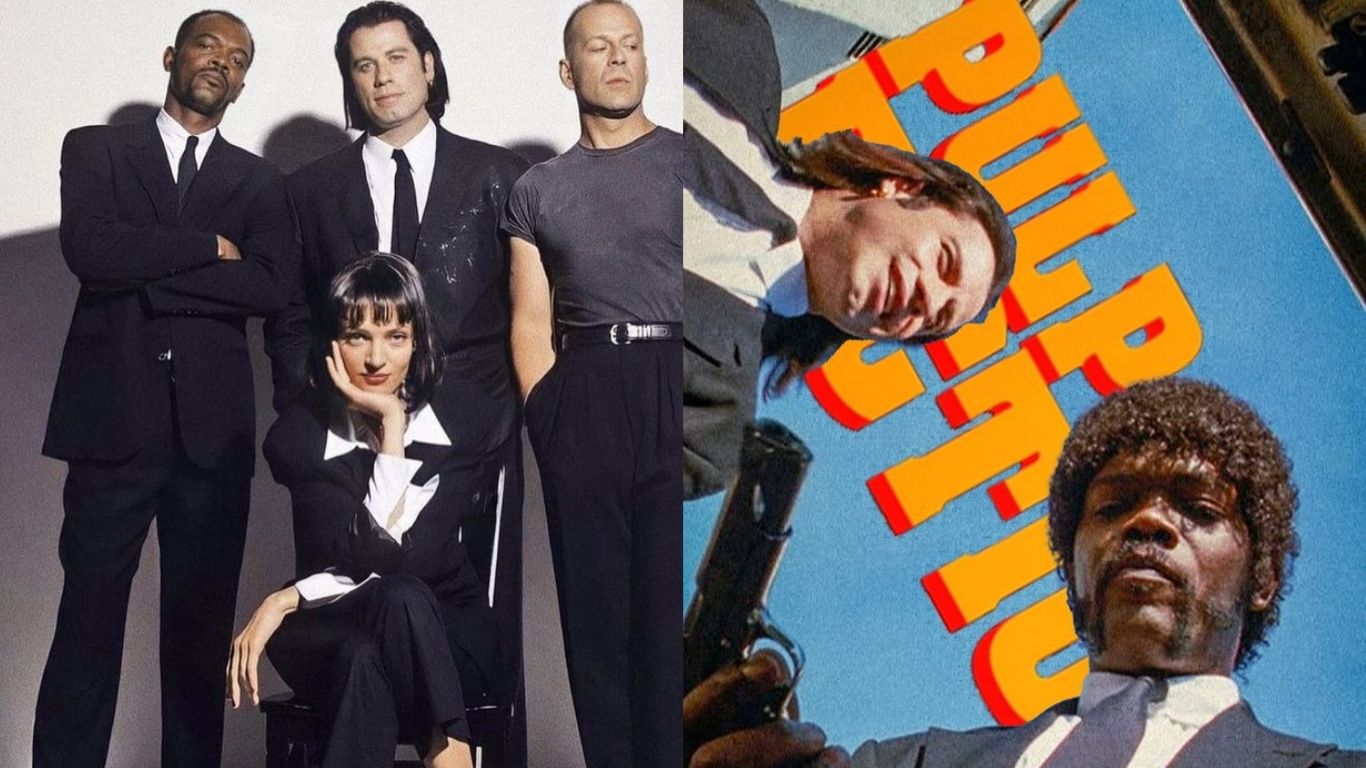
Icons don’t ask for permission. They just exist—and everyone notices.
The pulp fiction poster crossed boundaries between cinema, art, and lifestyle.
Why it stuck:
-
Strong female imagery
-
Retro appeal
-
Emotional resonance
Variations and International Posters
Different countries created alternative posters, but none reached the fame of the original.
Some focused on violence. Others highlighted different characters. Still, the Mia Wallace version remains supreme.
Interesting fact:
Even those who haven’t watched the film can instantly recognize its iconic poster.
The Poster as Wall Art Today
Today, the pulp fiction poster is less about promotion and more about personal style.
People hang it to say something about themselves—about taste, nostalgia, and rebellion.
Popular spaces:
-
Home offices
-
Living rooms
-
Creative studios
Collectors and Original Prints
Original prints from the 1990s can be valuable, especially if they’re in good condition.
Collectors look for:
-
Authentic Miramax markings
-
Original release dates
-
Minimal wear
Prices vary, but demand remains strong.
Influence on Modern Movie Posters
Modern posters often try to copy its vibe—strong central figure, minimal text, bold confidence.
Few succeed.
The lesson? You can’t fake authenticity.
Key influence:
Character-first storytelling through visuals.
Why the Poster Still Matters Today
In a world flooded with digital ads, the pulp fiction poster reminds us of the power of a single image.
It doesn’t shout. It doesn’t chase trends. It simply exists—and that’s why it still wins.
Conclusion
The pulp fiction poster is more than a movie advertisement. It’s a visual landmark, a cultural symbol, and a masterclass in design simplicity. Like a great song you never get tired of, it keeps finding new audiences without changing a thing.
Decades later, it still asks the same silent question: Are you cool enough to look away?
FAQs
1. Why is the pulp fiction poster so famous?
Because it combines bold design, cultural timing, and strong character imagery into one unforgettable visual.
2. Who is featured on the pulp fiction poster?
Uma Thurman as Mia Wallace is the central figure on the iconic poster.
3. Is the pulp fiction poster inspired by real magazines?
Yes, it draws heavy inspiration from vintage pulp crime magazines.
4. Are original pulp fiction posters valuable?
Yes, original prints from the 1990s can be valuable to collectors.
5. Can I use the pulp fiction poster as home décor?
Absolutely. Many people display it as wall art due to its timeless style and cultural appeal.
For More Visit: Thecelebrities