
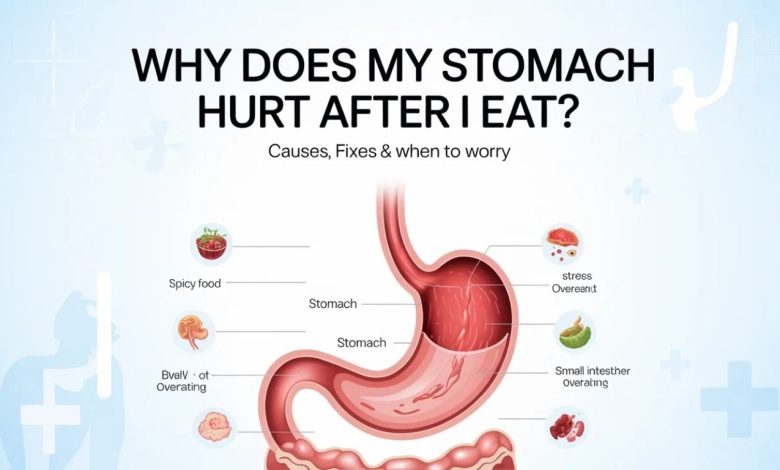
Have you ever finished a meal, leaned back in your chair, and suddenly thought, “Why does my stomach hurt after I eat?” You’re not alone. It’s one of the most common digestive complaints people experience.
Sometimes it’s just mild discomfort. Other times, it feels sharp, crampy, or bloated. The truth is, your stomach isn’t supposed to hurt after eating. Eating should fuel you, not frustrate you.
So what’s going on?
In this guide, we’ll break down the real reasons behind that post-meal pain. We’ll keep it simple, practical, and easy to understand—because your health shouldn’t feel like a science exam.
Is It Normal for Your Stomach to Hurt After Eating?
Let’s start with the big question: Why does my stomach hurt after I eat? Is that normal?
Occasional discomfort? Yes, that can happen.
Regular pain after meals? No, that’s your body waving a red flag.
Your digestive system is like a factory assembly line. When you eat, food travels from your mouth to your stomach, where acids break it down. If something disrupts that process, pain can show up.
Overeating – The Most Common Cause
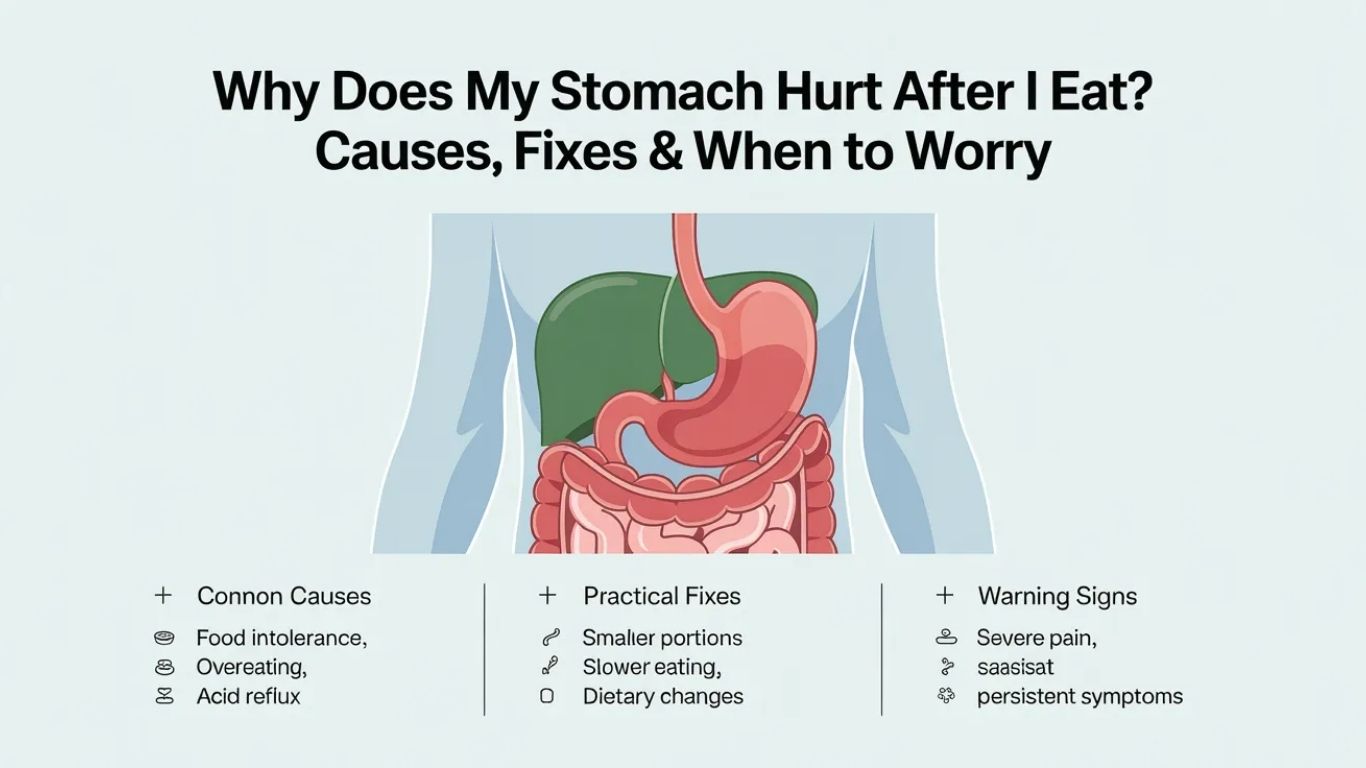
Let’s be honest—we’ve all done it. That extra slice of pizza. That second bowl of rice.
When you overeat, your stomach stretches more than it should. Think of it like overfilling a balloon. It expands, creating pressure and discomfort.
Symptoms of overeating pain:
-
Tight feeling
-
Mild cramping
-
Sleepiness
-
Bloating
The fix? Smaller portions. Eat slowly. Give your brain time to realize you’re full.
Indigestion and Acid Reflux
Indigestion (also called dyspepsia) is another common answer to “why does my stomach hurt after I eat.”
You might feel:
-
Burning sensation
-
Fullness after small meals
-
Nausea
-
Burping
Acid reflux happens when stomach acid flows back into the esophagus. That burning chest pain? That’s heartburn.
Occasional reflux is normal. Frequent reflux may be linked to GERD (Gastroesophageal Reflux Disease).
Food Intolerances and Sensitivities
Sometimes the pain isn’t about how much you eat—it’s about what you eat.
For example:
-
Lactose intolerance (dairy issues)
-
Gluten sensitivity
-
High-fat foods
If you notice pain after specific foods, your body may be struggling to digest them.
Keeping a food diary can help connect the dots.
Food Allergies – A More Serious Reaction
Unlike intolerances, food allergies involve your immune system.
Symptoms may include:
-
Stomach cramps
-
Vomiting
-
Swelling
-
Difficulty breathing
Food allergies can be dangerous and may lead to anaphylaxis. If symptoms are severe, seek emergency care immediately.
Gas and Bloating Problems
Gas is normal. Painful gas isn’t.
When food breaks down in your intestines, gas forms. If it gets trapped, it causes sharp or cramp-like pain.
Common gas-triggering foods include:
-
Beans
-
Carbonated drinks
-
Broccoli
-
Onions
It might feel embarrassing, but it’s completely human.
Stomach Ulcers
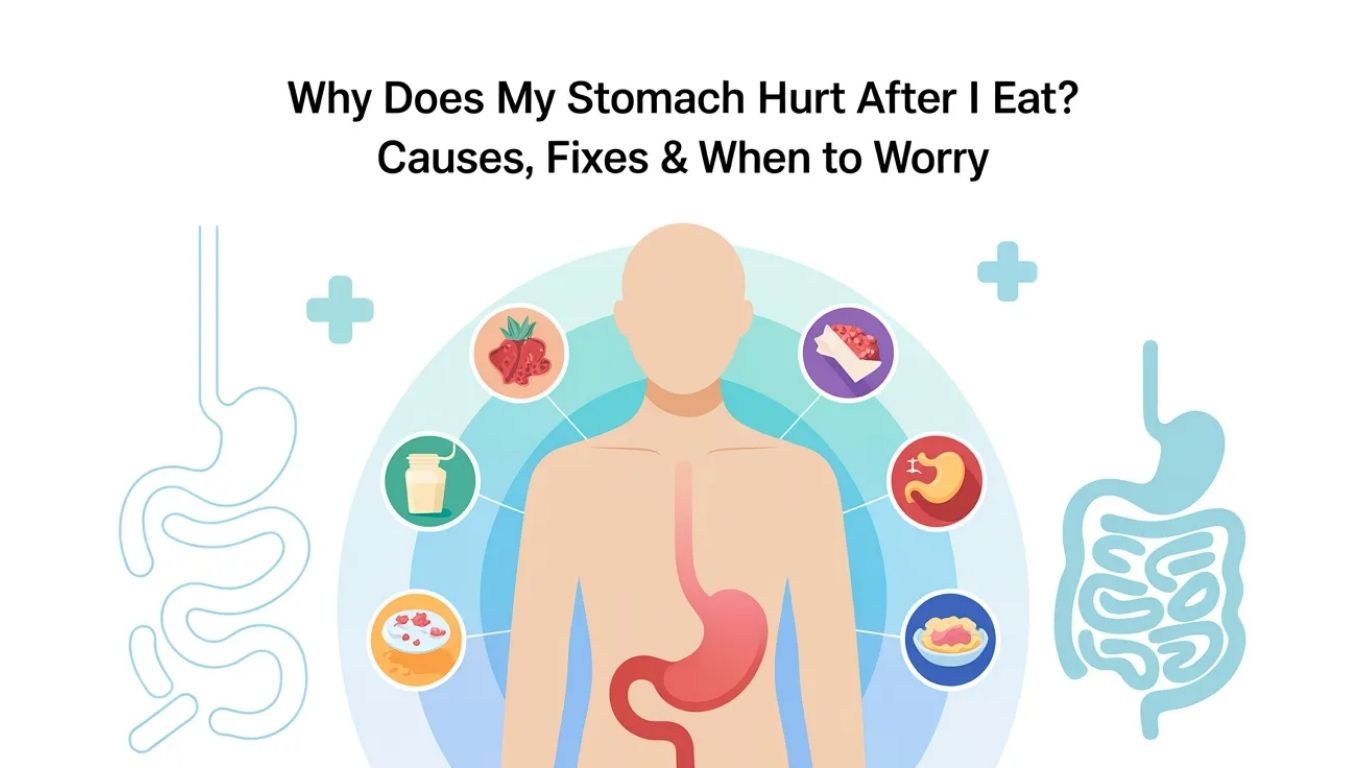
If you’re asking “why does my stomach hurt after I eat” and the pain feels burning or sharp, ulcers could be a cause.
A stomach ulcer is a sore in the stomach lining. The bacterium Helicobacter pylori is often responsible.
Symptoms may include:
-
Burning pain
-
Nausea
-
Pain between meals
-
Dark stools
Ulcers require medical treatment.
Gallbladder Issues
Pain on the right side of your upper abdomen after fatty meals? That could be gallbladder trouble.
Gallstones can block bile flow, causing intense pain known as a gallbladder attack.
The gallbladder acts like a storage pouch for bile, which helps digest fats. When it’s blocked, digestion becomes painful.
Irritable Bowel Syndrome (IBS)
Irritable bowel syndrome (IBS) affects the large intestine.
Symptoms include:
-
Cramping
-
Bloating
-
Diarrhea or constipation
-
Pain after eating
IBS is common and manageable with diet and stress control.
Stress and Emotional Triggers
Here’s something surprising: your brain and stomach are deeply connected.
Ever felt “butterflies” before a big event?
Stress can disrupt digestion, causing pain, nausea, or cramping. Anxiety tightens muscles—including those in your digestive tract.
In simple terms, your stomach feels what your mind feels.
When Pain Signals Something Serious
Sometimes stomach pain after eating points to more serious conditions such as:
-
Pancreatitis
-
Celiac disease
-
Inflammatory bowel disease
Warning signs include:
-
Severe, persistent pain
-
Fever
-
Vomiting blood
-
Unexplained weight loss
If you experience these, seek medical attention immediately.
How to Relieve Stomach Pain After Eating
Let’s talk solutions.
If you’re wondering “why does my stomach hurt after I eat,” here are quick relief tips:
Simple Remedies:
-
Walk gently for 10–15 minutes
-
Drink warm water
-
Avoid lying down immediately
-
Use a heating pad
Over-the-counter antacids may help mild indigestion.
Foods That Commonly Trigger Pain
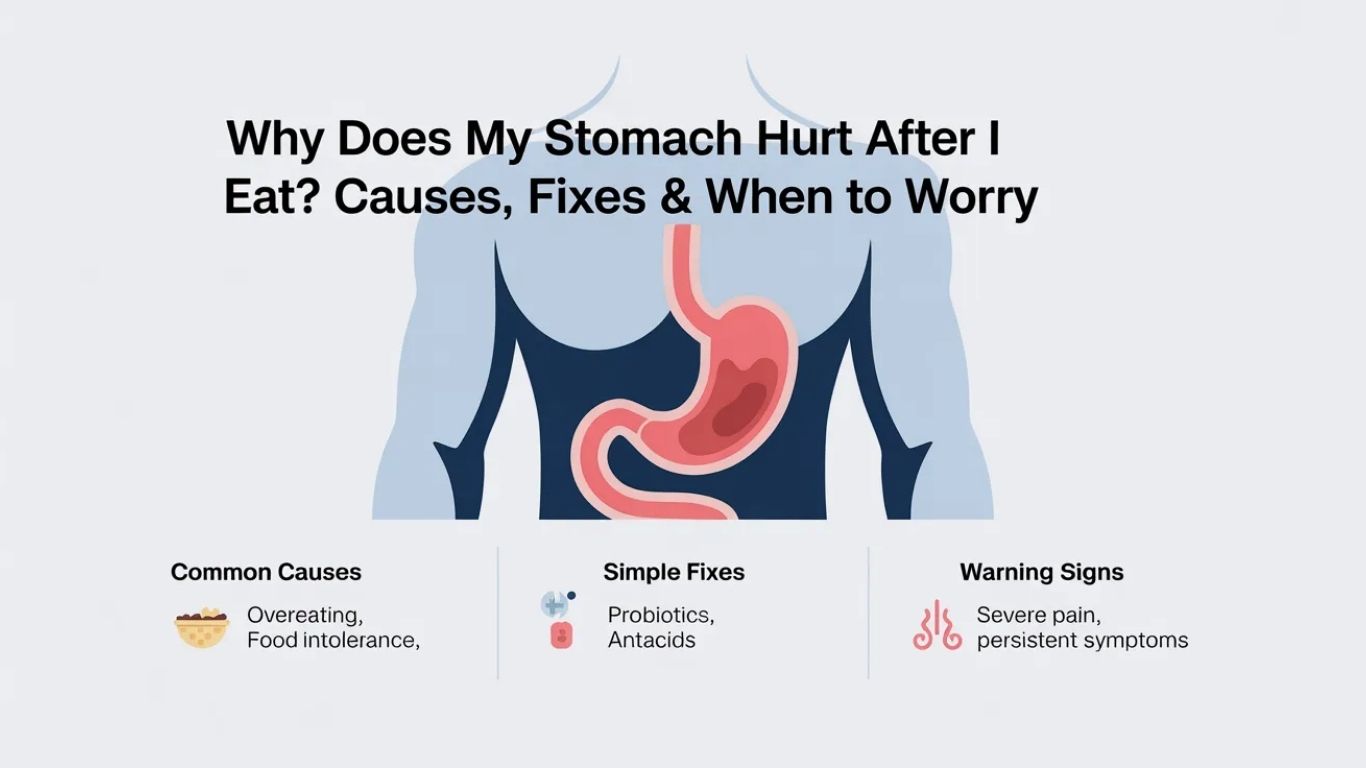
Certain foods are frequent troublemakers:
-
Fried foods
-
Spicy dishes
-
Sugary drinks
-
Alcohol
-
Dairy (for lactose intolerance)
Pay attention to patterns. Your body usually gives clues.
When to See a Doctor
You should consult a doctor if:
-
Pain happens frequently
-
Symptoms worsen
-
You notice blood in stool
-
Pain interferes with daily life
Getting checked early prevents bigger problems later.
Preventing Stomach Pain in the Future
Prevention is better than cure, right?
Here’s how to reduce your chances of asking “why does my stomach hurt after I eat” again:
-
Eat smaller meals
-
Chew thoroughly
-
Reduce stress
-
Avoid trigger foods
-
Stay hydrated
Think of your stomach like a car engine. Give it the right fuel, maintain it properly, and it runs smoothly.
Conclusion
If you’ve been wondering, “why does my stomach hurt after I eat,” the answer could range from something simple like overeating to more complex digestive issues.
Your body communicates through discomfort. Instead of ignoring it, listen carefully. Most post-meal stomach pain is manageable with small lifestyle changes. But persistent or severe pain should never be ignored.
Eating should nourish you, not punish you. Pay attention, make smart adjustments, and your digestive system will thank you.
FAQs
1. Why does my stomach hurt after I eat even small meals?
It could be indigestion, ulcers, IBS, or food intolerance. If it happens frequently, consult a doctor.
2. Is stomach pain after eating a sign of food allergy?
It can be, especially if accompanied by swelling, rash, or breathing problems.
3. Why does my stomach hurt after I eat fatty foods?
Fatty foods may trigger gallbladder issues or slow digestion, causing discomfort.
4. Can stress cause stomach pain after eating?
Yes, stress affects digestion and can lead to cramps or nausea.
5. When should I worry about stomach pain after eating?
Seek medical help if the pain is severe, persistent, or accompanied by alarming symptoms like vomiting blood or weight loss.
For More Visit: Thecelebrities