

Have you ever tried threading a needle and felt like you were aiming at a moving target? You squint, hold your breath, push the thread forward… and miss. Again. And again.
If that sounds familiar, you’re not alone. Threading a needle can feel like trying to park a truck in a space meant for a bicycle. That’s where a needle threader becomes your tiny but mighty hero.
In this guide, we’ll walk through how to use a needle threader in the simplest way possible. Whether you’re sewing a button, fixing a hem, or starting embroidery, you’ll learn exactly what to do — step by step.
What Is a Needle Threader?
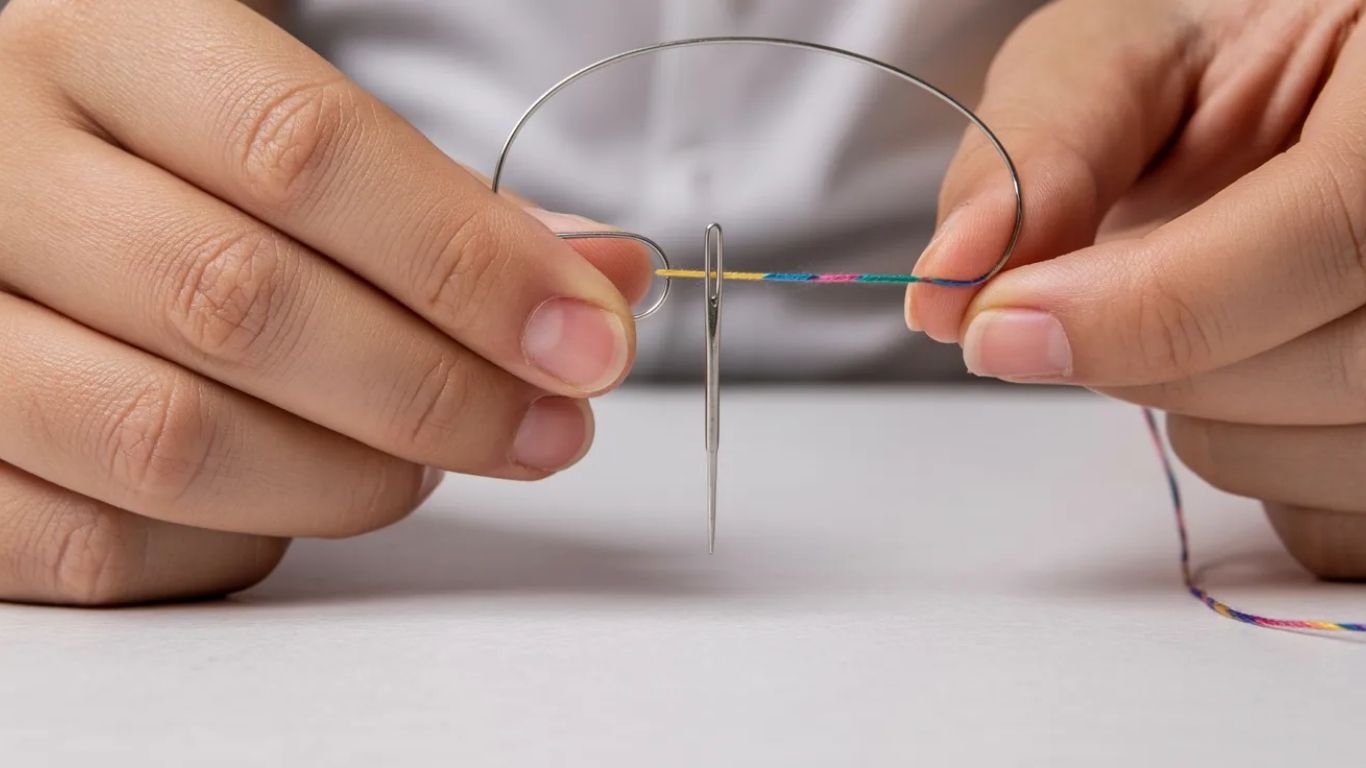
A needle threader is a small tool designed to help you put thread through the eye of a needle. Most traditional needle threaders have:
-
A thin metal wire loop
-
A flat metal or plastic handle
The wire is flexible and small enough to pass through the needle’s eye. Once it’s through, you place your thread into the loop and pull it back through.
Simple, right? And yet, life-changing.
Why You Should Use a Needle Threader

You might wonder, “Why not just do it by hand?”
Here’s why:
-
Saves time
-
Reduces frustration
-
Perfect for small needle eyes
-
Helpful for weak eyesight
-
Great for shaky hands
If threading by hand feels like solving a puzzle in the dark, using a needle threader is like turning on the lights.
Types of Needle Threaders
Not all needle threaders are the same. Let’s look at common types:
1. Basic Wire Loop Threader
The most common type. Simple and affordable.
2. Automatic Needle Threader
These are small devices where you press a button and it hooks the thread for you.
3. Sewing Machine Needle Threader
Many modern sewing machines come with built-in threaders.
4. Heavy-Duty Threader
Designed for thick thread or yarn.
Each one works slightly differently, but the basic idea remains the same.
Tools You Need Before Starting
Before learning how to use a needle threader, gather:
-
A needle
-
Thread
-
A needle threader
-
Good lighting
Lighting is important. Even with a threader, you need to see what you’re doing.
How to Use a Needle Threader (Step-by-Step)
Now let’s get to the heart of it.
Step 1: Insert the Wire Loop
Hold your needle steady. Push the thin wire loop of the threader through the eye of the needle.
Make sure the loop passes completely through.
Step 2: Insert the Thread
Take the end of your thread and place it through the wire loop.
You only need about 2–3 inches through the loop.
Step 3: Pull Back Gently
Carefully pull the threader back out of the needle.
As it slides out, it pulls the thread through the needle’s eye.
That’s it. You’re done.
If you’ve been struggling before, this will feel almost magical.
How to Use a Needle Threader for Small Eyes
Some needles — especially for fine sewing or beading — have extremely tiny eyes.
Here’s what to do:
-
Use a thin thread
-
Cut the thread cleanly (no frayed ends)
-
Insert the wire loop slowly and carefully
If the wire bends too much, you may need a finer threader designed for delicate needles.
How to Use a Needle Threader for Sewing Machines

Modern sewing machines often include a built-in threader.
The process usually looks like this:
-
Lower the needle fully.
-
Pull down the threader lever.
-
A tiny hook passes through the needle eye.
-
Place the thread on the hook.
-
Release the lever.
-
The thread pulls through automatically.
Always check your machine’s manual for exact instructions, but the principle is similar to hand threaders.
Common Mistakes to Avoid
Even though learning how to use a needle threader is simple, people still make mistakes.
Using Too Thick Thread
If the thread is too thick, it won’t pass easily.
Pulling Too Hard
The wire loop is delicate. Pull gently.
Inserting the Loop Halfway
Make sure the loop fully passes through the eye.
Using a Damaged Threader
Bent or twisted wire can cause frustration.
Tips for Better Threading
Want to make it even easier?
-
Cut thread at a sharp angle
-
Moisten the thread end slightly
-
Use contrasting colors for visibility
-
Hold the needle steady on a flat surface
Think of it like threading a tiny door. The cleaner and straighter the key (thread), the easier it goes in.
Caring for Your Needle Threader
Needle threaders are small and fragile.
To make yours last:
-
Store it in a sewing kit
-
Avoid bending the wire
-
Keep away from moisture
-
Don’t pull aggressively
A little care goes a long way.
When to Replace a Needle Threader
If you notice:
-
Bent wire
-
Loose handle
-
Rust
-
Fraying loop
It’s time for a new one.
Luckily, they’re inexpensive and easy to replace.
Needle Threader vs. Threading by Hand
Let’s compare.
Threading by hand:
-
Requires steady hands
-
Needs good eyesight
-
Can be frustrating
Using a needle threader:
-
Faster
-
Easier
-
Less stress
For beginners, seniors, or anyone with vision issues, a threader isn’t just helpful — it’s essential.
Who Benefits Most from Using One?
While anyone can use one, it’s especially helpful for:
-
Seniors
-
Children learning to sew
-
People with arthritis
-
Beginners
-
Embroidery lovers
If sewing feels stressful, a needle threader can turn it into a relaxing hobby again.
Final Thoughts on Mastering the Skill
Learning how to use a needle threader is one of those small skills that makes a big difference. It may seem like a tiny tool, but it removes one of the most frustrating parts of sewing.
Instead of squinting and sighing, you’ll thread your needle in seconds.
And once you’ve done it a few times, you’ll wonder why you ever struggled without it.
FAQs
1. How do you use a needle threader correctly?
Insert the wire loop through the needle eye, place the thread in the loop, and gently pull it back through the needle.
2. Why does my needle threader keep breaking?
You may be pulling too hard or using thread that’s too thick. The wire loop is delicate and needs gentle handling.
3. Can you use a needle threader for embroidery needles?
Yes, but make sure you use one suitable for the size of your needle and thread thickness.
4. Are automatic needle threaders better?
Automatic threaders are convenient, especially on sewing machines, but basic wire loop threaders work just as well for hand sewing.
5. Is a needle threader necessary for beginners?
While not required, it makes learning much easier and reduces frustration, especially for small needle eyes.
For More Visit: Thecelebrities