
What Is a Fire Weather Watch? Understanding the Warning and Why It Matters

Introduction
Imagine waking up and hearing on the news that your area is under a Fire Weather Watch. It might sound serious, but what exactly does it mean? Is there already a fire nearby, or is it just a precaution?
Many people ask the same question: what is a fire weather watch and why do weather agencies issue it?
In simple terms, a Fire Weather Watch is like a heads-up from nature’s early warning system. It means weather conditions could soon become perfect for wildfires to start and spread quickly. Think of it as the sky saying, “Be careful today—conditions are risky.”
In this article, we’ll explore everything you need to know about what is a fire weather watch, including why it’s issued, how it differs from other alerts, and what steps you should take to stay safe.
What Is a Fire Weather Watch
So let’s answer the main question clearly: what is a fire weather watch?
A Fire Weather Watch is an alert issued when weather conditions are expected to create a high risk of wildfire within the next 12–72 hours.
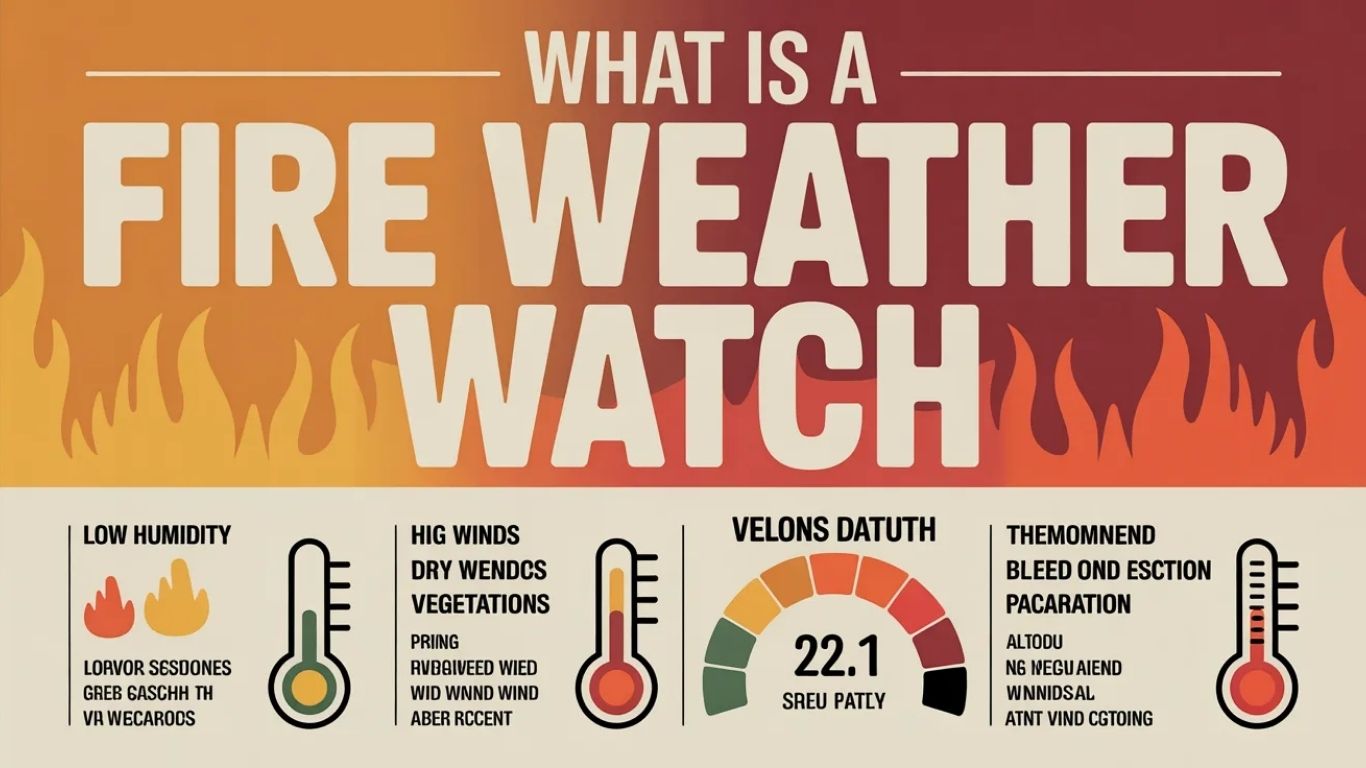
These conditions typically include:
-
Strong winds
-
Low humidity
-
Dry vegetation
-
Warm temperatures
The watch does not mean a fire is currently happening. Instead, it signals that if a fire starts, it could spread quickly.
Think of it like seeing dark storm clouds in the distance. The rain hasn’t started yet, but the conditions suggest it might soon.
Who Issues Fire Weather Watches
Fire weather alerts are usually issued by meteorologists working with agencies such as the National Weather Service.
These experts study weather patterns, satellite data, and ground conditions.
They collaborate with fire management organizations like:
-
U.S. Forest Service
-
Local fire departments
-
Emergency management agencies
Their goal is simple: warn people before conditions become dangerous.
Weather Conditions That Trigger a Watch
Several weather factors combine to create wildfire risk.
Strong Winds
Wind acts like a bellows feeding a flame. Even a small spark can grow into a fast-moving wildfire when winds are strong.
Low Humidity
Humidity refers to the amount of moisture in the air. When humidity drops very low, plants and grasses dry out quickly.
Dry Vegetation
During dry seasons, grass, leaves, and shrubs can become extremely flammable.
Warm Temperatures
Heat dries the landscape even more, making it easier for fires to ignite.
When these factors appear together, meteorologists may issue a Fire Weather Watch.
Fire Weather Watch vs Red Flag Warning
Many people confuse a Fire Weather Watch with a Red Flag Warning.
Here’s the difference:
Fire Weather Watch
-
Conditions could become dangerous soon
-
Issued ahead of time
-
Provides early preparation
Red Flag Warning
-
Dangerous fire conditions are happening now or about to happen
-
Indicates extreme wildfire risk
Think of the watch as the yellow traffic light, while the warning is the red light telling everyone to stop and pay attention.
Why Fire Weather Watches Are Important
Wildfires can start and spread incredibly fast.
A Fire Weather Watch helps:
-
Emergency crews prepare resources
-
Communities stay alert
-
Residents avoid risky activities
Early warnings can prevent disasters before they happen.
Sometimes simply postponing activities like outdoor burning can stop a wildfire from starting.
Areas Most Affected by Fire Weather Watches
Fire Weather Watches are most common in regions with dry climates and large forested areas.
In the United States, they often occur in:
-
California
-
Arizona
-
Colorado
-
Texas
-
Parts of the Pacific Northwest
These regions frequently experience hot, dry, windy conditions that increase wildfire risk.
However, fire weather alerts can occur almost anywhere during dry seasons.
The Role of Wind in Wildfire Risk
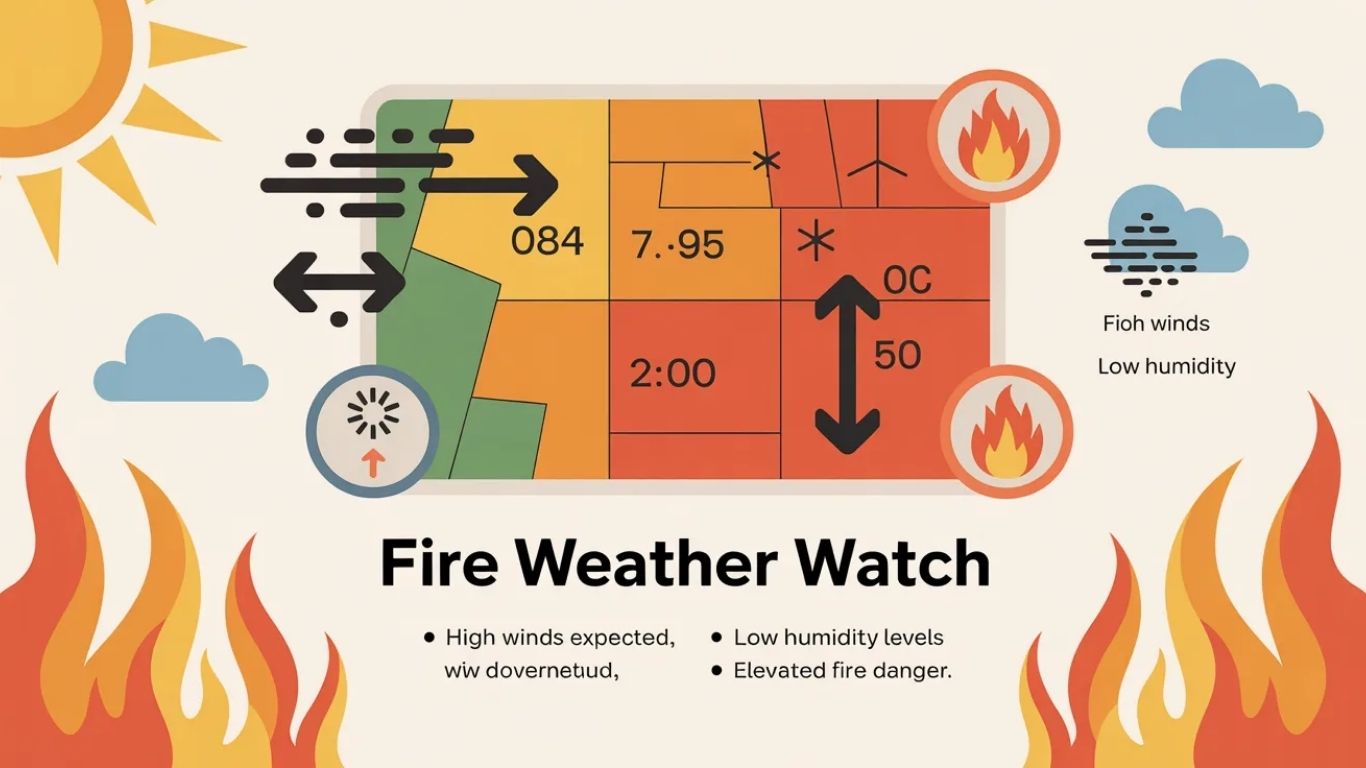
Wind is one of the biggest factors in wildfire behavior.
When winds are strong, they can:
-
Push flames rapidly across land
-
Carry burning embers long distances
-
Spread fires to new areas
Imagine trying to blow out a candle. A gentle breath barely moves the flame, but a strong gust makes it flare wildly.
Wildfires react the same way.
Dry Air and Low Humidity Explained
Humidity plays a huge role in wildfire risk.
When the air is moist, plants hold water and are harder to burn.
But when humidity drops below 20–30%, vegetation dries out quickly.
Dry plants act like natural fuel waiting for a spark.
This is why Fire Weather Watches often occur during hot, dry afternoons.
Human Activities That Can Start Fires
Even when nature creates risky conditions, most wildfires start from human activity.
Common causes include:
-
Campfires left unattended
-
Cigarettes thrown from vehicles
-
Sparks from power equipment
-
Outdoor burning
During a Fire Weather Watch, officials often ask people to avoid these activities.
One small spark can become a wildfire under the wrong conditions.
What Residents Should Do During a Fire Weather Watch
When a Fire Weather Watch is issued, residents should take simple precautions.
1. Avoid outdoor burning
Do not burn trash or yard waste.
2. Be careful with equipment
Tools like chainsaws or lawnmowers can create sparks.
3. Check emergency plans
Know evacuation routes and safety procedures.
4. Stay updated
Follow weather reports and local alerts.
Taking these steps helps reduce wildfire risk.
How Communities Prepare for Fire Risk
Local governments and fire departments also prepare when watches are issued.
Preparation may include:
-
Pre-positioning firefighting crews
-
Monitoring high-risk areas
-
Restricting campfires in parks
-
Increasing patrols in forests
These actions allow emergency teams to respond quickly if a fire starts.
Technology Used to Monitor Fire Weather
Modern technology helps scientists monitor wildfire conditions more accurately.
Important tools include:
-
Weather satellites
-
Remote sensors
-
Computer weather models
-
Fire danger indexes
These technologies help meteorologists detect dangerous conditions days in advance.
Without them, communities would have far less time to prepare.
Climate Change and Fire Weather Conditions
Scientists have observed that wildfire seasons are becoming longer in many parts of the world.
Factors linked to this trend include:
-
Rising temperatures
-
Drier landscapes
-
Longer drought periods
These changes can increase the frequency of Fire Weather Watches.
As climate patterns shift, early warning systems become even more important.
Staying Informed During Fire Season
During wildfire season, staying informed is essential.
You can keep updated by:
-
Watching local weather reports
-
Signing up for emergency alerts
-
Following fire departments on social media
-
Checking official weather websites
Information is one of the best tools for staying safe during fire risk periods.
Conclusion
Understanding what is a fire weather watch can help people respond calmly and responsibly when alerts are issued. A Fire Weather Watch doesn’t mean a wildfire has already started—it simply warns that conditions could allow one to ignite and spread quickly.
Think of it as nature’s early alarm system, giving communities time to prepare and prevent disasters before they happen. By staying informed, avoiding risky activities, and following safety guidelines, residents can help protect homes, forests, and lives.
Wildfires may be powerful forces of nature, but awareness and preparation can make a huge difference. The next time you hear about a Fire Weather Watch, you’ll know exactly what it means—and what steps to take.
FAQs
1. What is a fire weather watch?
A Fire Weather Watch is an alert issued when weather conditions could soon create a high risk of wildfires, usually within the next 12–72 hours.
2. What is the difference between a fire weather watch and a red flag warning?
A watch means dangerous conditions are possible, while a Red Flag Warning means those conditions are already happening or imminent.
3. What weather conditions lead to a fire weather watch?
Strong winds, low humidity, warm temperatures, and dry vegetation are the main factors that lead to this alert.
4. Does a fire weather watch mean there is a wildfire?
No. It only indicates that conditions are favorable for fires to start and spread quickly if one ignites.
5. What should people do during a fire weather watch?
Residents should avoid outdoor burning, use equipment carefully, stay informed about weather updates, and follow safety guidance from local authorities.
For More Visit: Thecelebrities


